|
What is Aerogel?
Aerogel
is made from Silicon Dioxide, the same material as ordinary Glass,
only 1,000
times less dense.
Aerogel (also called 'frozen smoke' because of its hazy blue appearance), is
a truly remarkable material.
It is the lightest and lowest-density solid known to exist, and holds an
unbelievable 15 entries
in the Guinness Book of World
Records, including best insulator and
lowest density solid.
Aerogel is composed of 99.8% air and is chemically similar to ordinary
glass.
Being the world's
lightest known solid, it weighs only three times that of air.
When handled, Aerogel feels like a very light, hard foam. Being
chemically similar to glass, it also happens to shatter like glass, yet
is incredibly strong structurally, and can support thousands of times
its own weight. Theoretically,
a block weighing less than a pound could support a weight of half a ton.
Due to its microstructure, Aerogel is a powerful desiccant, rapidly
absorbing any moisture in your fingertips when held. This usually leaves
some dry spots on the skin that disappear in a short time.
Aerogel's true strength is its incredible insulating properties.
It negates just about any kind of
energy transfer - thermal, electrical or acoustic.
A one-inch thick Aerogel
window has the same insulation value as 15 panes of glass and trapped
air - which means a conventional window would have to be ten-inches
thick to equal a one-inch thick Aerogel window.
Aerogel's
density is just 3 milligrams per cubic centimeter.
Its melting point is 2,200
degrees F (1,200 degrees C).
A
large panel of Aerogel was most recently used by NASA in the Stardust
mission, which successfully collected collect comet & interstellar
dust samples & returned them to Earth. Previously, it was used in
the Mars Pathfinder Rover to insulate its components from the large
temperature swings on Mars.
|

|
The
Aerogel array in NASA's
Stardust spacecraft, used to
capture comet & dust particles. |
|

|

|
|
A
3,000°F blowtorch under a thin slice of Aerogel
has no effect on the crayons on top. |
A
brick supported by a small block
of Aerogel |
|
The
one drawback about this amazing material is its price.
Unfortunately
it's very expensive in solid block/chunk form.
Note
about larger block samples:
We
currently have a limited supply of odd-shaped, large & small samples
of Aerogel for sale.
We have attempted to obtain larger, uniform shapes (blocks,
disks, etc) without much luck.
These
larger uniform shapes are currently reserved for JPL and NASA
use only.
We will continue to try and obtain larger blocks & disks,
and will post any updates
on this page as soon as they are available.
Granular
Aerogel is much less expensive than the solid blocks of Aerogel
are.
When possible, try to use the granular form in your project instead
of the solid block/chunk form. |
|

|

|
|
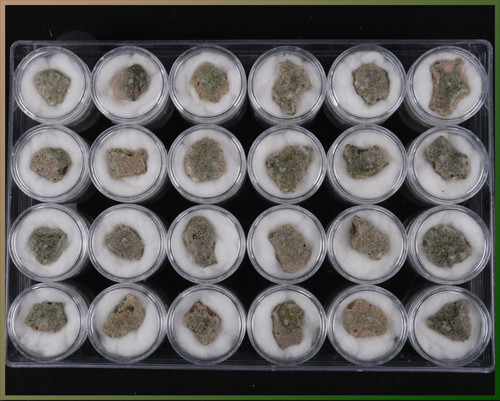
Typical
Small Aerogel samples |
|

|

|
|
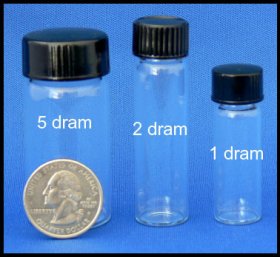
Typical
Aerogel
Fragments
( 5 dram vial ) |
|

|

|
|
Granular
Aerogel ( 100 cc
container ) |
Granular
Aerogel
particle size
|
|