Supplying the science hobbyist, industry, government, schools & universities since 1998.
"We specialize in small orders"

Radiation Detectors

> Click on images for additional information <

Detector Type

What it WILL do

What it WON'T Do

Features

The Prospecting
Geiger Counter


Sorry, this unit is
Discontinued.
Note:
Although these were affordable units, they were built with 40 year old technology and components. Parts are no longer available for these units and they are so inferior to modern Geiger counters that we cannot recommend investing money in one.
We recommend the
Pocket Digital or Professional Geiger counters
listed below.

Sorry, this unit is
Discontinued.

 Metal cased unit.

price:
N/A

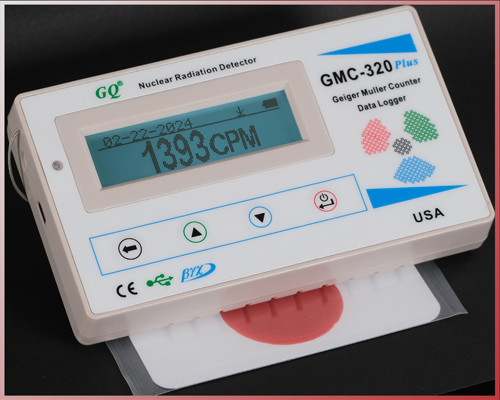
Pocket Digital
Geiger Counter

Good For: Detecting very low levels of Beta, Gamma &  X-Ray radiation.
Astonishingly sensitive unit perfect for detecting radioactive contamination in food, scrap metal and work areas as well as locating radioactive antique artifacts, etc. Provides a precise digital numerical value with a large, illuminated LCD display. Pocket-sized, simple & convenient to use. The best general purpose instrument we've found. State-of-the-art electronics & circuitry.

Uses two "AAA" batteries.

Ideal for all around use. 

Not For: Prospecting or detecting moderate or dangerous levels of Gamma radiation. Higher level radiation sources (such as any Uranium ore sample)  will just peg the meter at 999.

Pocket-sized and highly sensitive.

price:
$195.00


The Professional
Geiger Counter

Good For: Detecting all types of radiation, Alpha, Beta, Gamma &  X-Rays (depending on the type of probe used with the unit). Very sensitive device that will detect a very wide range of radiation levels.
Simply the best Geiger Counter manufactured today... period.
State-of-the-art electronics & circuitry.
This very unit is standard equipment for all nuclear research labs, Government agencies, hospitals, border patrols, etc... and these are the only units that we use ourselves, both for prospecting and research.

Uses two "D" batteries.

The best radiation detection instrument currently available.

Not For: Detecting radiation you don't have the probe for. Although this unit is ideal for detecting any type or level of radiation, you may need optional probes for detecting specific types or very high levels of radiation.

The undisputed top of the line. Professional & Industrial quality.
Very rugged metal cased unit.

price:
$820.00
to
$1,110.00

The Alpha Radioscope

Good For: Viewing short-range Alpha Particles ( Alpha Radiation ) and for demonstrating radiation scintillation (light flashes). A specialized demonstration optical detector.

Requires no batteries or power.

Ideal for student/classroom use. 

Not For: Detecting anything other than Alpha particles.

Inexpensive & educational.

price:
$
29.00

Radon Gas Detector

Good For: Detecting and monitoring radioactive Radon gas levels in your home or building.

Plugs in to standard wall outlet for continuous real-time Radon gas monitoring. 120 volts.

Not For: Detecting anything other than Radon gas.

24 hour continuous monitoring.

price:
$1
55.00

Cloud Chamber

Good For: Viewing actual tracks in real time made by speeding Alpha & Beta particles. Also view cosmic radiation arriving from outer space. Conduct a variety of table-top nuclear demonstrations. A specialized demonstration device.
Each unit is individually handcrafted
by our technicians, please allow a little extra time for delivery on these units. 

Requires Dry Ice to operate.

Ideal for student/classroom use.

Not For: Portable or outside use, or for measuring exact dose rates of radiation.

A fascinating & educational device.

price:
$
225.00

1" x 1" Sodium Iodide
Scintillation Crystal

Good For: Replacing old crystals in Scintillator detectors or making your own Scintillator detector. This crystal is a Thallium doped Sodium Iodide crystal, NaI(Tl). Like all crystals of this type, it responds only to Gamma radiation. Scintillation crystals produce flashes of light on exposure to Gamma radiation. Typically used with a Photomultiplier Tube & associated circuitry to form a highly sensitive Gamma radiation detector.

Not For: Detecting anything other than Gamma radiation. Not a detector itself, must be used with other electronic components & circuitry or as a replacement part in old Scintillator detectors.

Component
for the do-it-yourselfer

price:
$1
75.00

Can't decide which unit will work best for your application?
Just email us at:
unitednuclear@lobo.net

General Information About Radiation
When an atom of radioactive material decays,
there are three types of radiation that it may emit:

  • Alpha particles

  • Beta particles

  • Gamma rays ( and X-Rays )

( generally speaking, most radioactive materials emit two, or all three types of radiation )

Alpha particles ( a ) are relatively slow and heavy.
They have a low penetrating power - you can stop them with just a sheet of paper.
Alpha particles can not penetrate your skin. Due to the low penetrating power of Alpha particles, they are generally not a cause for concern, unless you ingest some material that emits Alpha radiation.
For the most part, materials that emit Alpha particles, also emit some Beta or Gamma radiation.

Beta particles ( b ) are fast, and light.
Beta particles have a medium penetrating power - they are stopped by a thin sheet of aluminum (such as aluminum foil) or plastic. Beta particles can penetrate deeply into your skin.

Gamma rays ( g ) have a high penetrating power - it takes a thick sheet of metal such as lead, or concrete to reduce them significantly.
Gamma rays penetrate your skin, and continue on... going right through your body.

The emission of radiation from radioactive materials is constant.
No matter how high or low the temperature, pressure, or any other physical condition gets,
the rate of natural radioactive decay from radioactive materials will remain the same.
This is why materials of this type are used in Atomic Clocks and for determining the age of ancient artifacts (known as Radiometric Dating).


-